
Alright. Let’s just say it plainly: Blockchain Defined in human language is basically this—
It’s a shared digital record book that no single person controls and nobody can secretly mess with.
That’s it.
When I first tried to understand blockchain defined in technical terms, I swear I felt like I was reading a toaster manual written by philosophers. Words like “distributed ledger,” “cryptographic hashing,” “consensus mechanisms.” I almost pulled a muscle rolling my eyes.
But once I understood it as a stubborn, transparent notebook shared across thousands of computers? It clicked.
And then I had this weird thought at 1:12 a.m. while eating leftover pizza:
“If this thing works for money… what else could it work for?”
Turns out? A lot.
How Blockchain Works (The Coffee Shop Version)
Imagine you and I, plus 10,000 other people, share a Google Doc.
Except:
- Nobody can delete anything once it’s written.
- Every new entry has to be approved by the group.
- There’s no central admin.
That’s basically how blockchain works.
It first gained attention because of Bitcoin, created by the mysterious Satoshi Nakamoto. But the tech underneath? That’s the real story.
Because once you understand decentralized systems, you start seeing opportunities everywhere.
It’s like when you learn a new word and suddenly hear it 47 times in one week.
🏦 Finance (Obviously… But Still Wild)
Yeah, I know. Crypto again.
But beyond speculative coins and internet drama, blockchain technology explained properly means financial systems without traditional middlemen.
Lower transaction fees.
Faster cross-border payments.
More transparency.
Platforms like Ethereum allow smart contracts — automated agreements that execute when conditions are met.
No “We’ll process your request in 3–5 business days.”
It just… happens.
I once waited seven days for a bank transfer and felt like I was sending money by carrier pigeon. If blockchain reduces that friction? I’m listening.

🏥 Healthcare — And Please Yes
Picture this.
You move from Texas to Colorado.
New doctor.
New forms.
“List all medications.”
You forget one.
Classic.
Blockchain impact on industries like healthcare could mean portable, secure medical records. Accessible but controlled. Hard to tamper with.
That’s huge.
And honestly, anything that reduces paperwork deserves a medal.
🚚 Supply Chains (The Invisible Backbone)
Okay, this one snuck up on me.
Blockchain defined in the context of supply chains is surprisingly practical.
Companies like Walmart have experimented with blockchain to track food products from farm to shelf.
Why does that matter?
Because if there’s contamination, they can trace it fast.
Not days.
Minutes.
That’s not sexy tech conference stuff.
That’s real.
🏠 Real Estate — Less Paper, More Sanity
Have you ever bought a house?
It’s 70% paperwork and 30% existential dread.
Blockchain could record property ownership permanently and transparently.
No “Oops, the document got lost.”
No shady backdating.
Some governments are experimenting with blockchain-based land registries. It’s early. It’s not universal. But it’s happening.
And if it means fewer 200-page PDFs? I’m emotionally invested.
🎓 Education and Credentials
Here’s a weirdly personal moment.
I once had to request my college transcripts.
It felt like summoning a dragon.
Blockchain defined for education means permanent, verifiable credentials.
No fake diplomas.
No “we can’t find your file.”
Students could own their academic history digitally.
That’s empowering.
Also slightly terrifying if you bombed freshman year algebra. But hey. Transparency.
🎨 Creative Industries (Not Just NFTs, Relax)
When NFTs exploded, I had mixed feelings.
But underneath the chaos, blockchain impact on industries like art and music is about ownership.
Artists can verify authenticity.
Musicians can track royalties.
Writers (hello) could potentially manage licensing without chasing emails.
Platforms built on Ethereum enable these kinds of smart contracts.
And while hype cycles are loud, the tech itself is quietly practical.
🗳️ Governance and Voting
Okay, this is where it gets serious.
Blockchain defined in governance is about trust.
Secure voting systems.
Transparent public spending records.
Tamper-resistant documentation.
It’s not mainstream yet. It’s complex. It requires careful implementation.
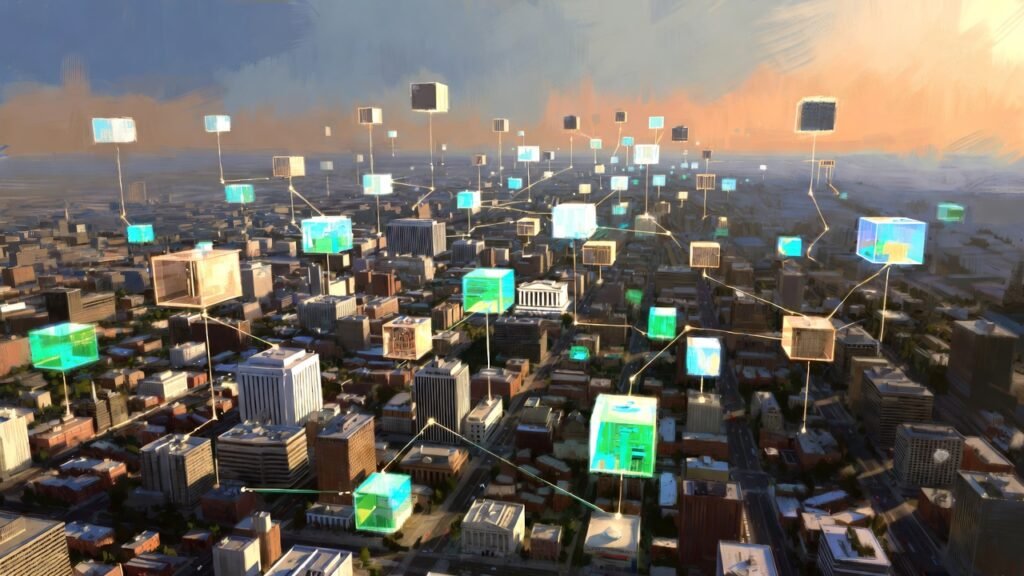
But the idea of decentralized systems reducing corruption? That’s powerful.
And yes, it sparks debates. Big ones.
But ignoring it doesn’t make it disappear.
The Quiet Part Nobody Talks About
Here’s what hit me recently.
Blockchain isn’t flashy by itself.
It’s infrastructure.
It’s plumbing.
Nobody gets excited about plumbing — until it breaks.
Blockchain defined at its core is about creating systems where trust doesn’t depend on a single authority.
That’s the revolution.
Not coins.
Not memes.
Trust architecture.
And that affects:
- Banking
- Healthcare
- Real estate
- Supply chains
- Education
- Government
- Even gaming
It’s less about replacing everything overnight and more about slowly upgrading systems.
Kind of like when the internet shifted from dial-up to broadband.
Quietly.
I remember the first time we got high-speed internet at home. I thought we were living in the future.
Now buffering makes me irrationally angry.
Perspective.
Is It Perfect? Nope.
Energy concerns exist.
Scalability challenges exist.
Regulation uncertainty exists.
Scams exist.
People oversell it.
People misunderstand it.
But that’s every emerging technology ever.
Remember when social media was just for sharing vacation photos?
Yeah.
Where To Read Without Getting a Headache
If you want deeper dives without academic overload, I’d suggest browsing explainers from places like CoinDesk or tech creators who explain concepts with humor instead of buzzwords.
Avoid anyone promising guaranteed riches.
Blockchain defined is about systems.
Not magic money printers.
The Bigger Picture
Sometimes I think about blockchain like this:
It’s not trying to replace everything.
It’s trying to reduce friction.
Reduce manipulation.
Reduce reliance on centralized trust.
That’s subtle.
But huge.
And when you zoom out, you realize it’s not just finance getting touched.
It’s every industry where records matter.
Which is… basically all of them.
Final Thought (And I Mean It Casually)
If you had asked me five years ago what blockchain meant, I would’ve shrugged and said “internet money?”
Now?
I see it as digital infrastructure.
Not loud.
Not glamorous.
But foundational.
Blockchain defined simply is a shift in how we store and verify truth in digital systems.
And whether we’re ready or not, it’s weaving itself into industries quietly.
Like background software updates you didn’t notice until everything runs smoother.
Anyway.
That’s my messy, coffee-fueled take.
If this cracked open even a tiny bit of curiosity, good.
If not, that’s cool too.
But next time someone says blockchain is “just crypto,” you’ll know there’s a lot more going on under the hood.

