
I’ve been thinking a lot about what’s happening inside the fintech industry lately. Probably too much. Like, the kind of thinking where you’re brushing your teeth and suddenly you’re wondering if your bank will even exist in five years.
Is that dramatic?
Maybe.
But I live in the US, and over the past decade I’ve watched my wallet slowly turn into… my phone. Venmo instead of cash. Apple Pay instead of cards. My “bank” barely has a building anymore. And half the startups I’ve written about in the past few years? They’re either unicorns now or quietly disappeared like that one kid from high school who said he was “starting a band.”
Fintech is not just “finance + tech.” It’s kind of this chaotic kitchen where money, code, regulation, and human impatience are all bubbling together. Sometimes it smells amazing. Sometimes something explodes.
So let’s talk about where this whole thing is going over the next five years.
Not in a corporate whitepaper way. Just… like we’re sitting across from each other at a coffee shop and I’m waving my hands too much.
The Digital Banking Future Is Getting Weird (In a Good Way?)
I remember the first time I opened a bank account without stepping inside a bank. I was on my couch. In sweatpants. Half-watching a rerun of The Office.
And I thought: wait, that’s it?
No paperwork. No awkward small talk with someone named Brad who tries to upsell me on a credit card I don’t need.
The digital banking future isn’t just “banks but online.” It’s banks that don’t look like banks at all.
Over the next five years, I’m betting we’ll see:
- More niche banks (for freelancers, gamers, immigrants, creators)
- Fully AI-powered financial assistants
- Invisible banking baked into other apps
Which brings me to something that still kinda blows my mind…
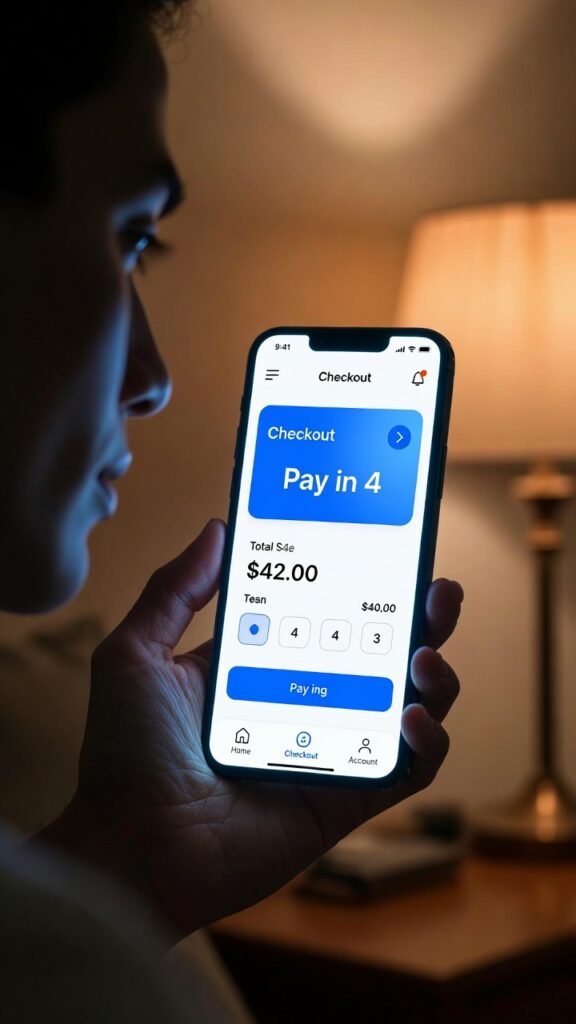
Embedded Finance Is Everywhere (You Just Don’t Notice It)
Okay. Embedded finance sounds like one of those buzzwords that consultants charge $400/hour to explain.
But here’s the simple version.
It’s when financial services are built directly into non-financial platforms.
You order food or can finance it.
You run an e-commerce store and get loans inside your dashboard.
No bank website. No “application pending” emails.
It’s just… there.
Companies like Stripe have been quietly building the rails for this. And platforms like Shopify aren’t just selling websites anymore—they’re offering loans, payments, even banking features.
Inside the fintech industry, this shift is massive. Because the bank stops being the destination. It becomes the plumbing.
And nobody thinks about plumbing—until it breaks.
AI in Finance Is Not Just Chatbots Anymore
Let’s talk about the elephant in every room lately: AI.
I know. You’re tired of hearing about it.
But inside the fintech industry? AI isn’t a gimmick. It’s becoming the co-pilot.
Fraud detection is getting sharper.
Credit scoring is getting more dynamic.
Investment tools are getting weirdly personalized.
A few years ago, robo-advisors felt like this cute experiment. Now companies like Betterment and Wealthfront are managing billions.
And it’s not just “set it and forget it” portfolios anymore. AI models are:
- Predicting cash flow
- Suggesting tax moves
- Flagging suspicious transactions in milliseconds
But here’s the part that makes me squirm a little.
If AI is deciding who gets loans… who gets approved… who gets flagged…
We better make sure it’s not inheriting all our old biases.
That’s going to be one of the quiet battles over the next five years. Not flashy. But important.
Crypto, But… Grown Up?
Okay, confession.
In 2021, I definitely refreshed my crypto app way too often. Like it was going to magically make me rich while I microwaved leftovers.
We’ve all calmed down a bit since then.
But blockchain? Stablecoins? Tokenized assets?
They’re not disappearing.
Companies like Coinbase survived the rollercoaster. And traditional players like BlackRock are dipping into tokenization.
What’s changing is the tone.
Less “to the moon 🚀.”
More “how do we make this boring and reliable?”
And honestly? That’s healthy.
Over the next five years, I think crypto becomes infrastructure. Not hype. Not headlines. Just… rails.
(Still volatile. Let’s not get carried away.
The War on Fees (Finally?)
You know what used to drive me insane?
Overdraft fees.
Thirty-five dollars because I forgot a subscription hit early? Cool. Love that for me.
The next phase inside the fintech industry is brutal competition over pricing. Zero-fee trading. No monthly minimums. Instant transfers.
Companies like Robinhood already disrupted brokerage fees (for better or worse). Traditional banks had to react.
And consumers? We got used to “free.”
The problem is… nothing is really free.
So fintech companies are experimenting with:
- Subscription models
- Premium tiers
- Interchange revenue
- Data-driven monetization (which raises privacy eyebrows)
The next five years will test which business models actually survive when venture capital isn’t just throwing confetti at every pitch deck.
Regulation Is Catching Up (Slowly, Like That One Friend)
Regulation in fintech is like that friend who says they’re “on the way” but hasn’t left the house yet.
Governments are paying attention now.
The SEC.
The CFPB.
Global regulators.
After a few high-profile collapses (you know the ones), policymakers aren’t sitting quietly anymore.
Inside the fintech industry, compliance teams are becoming just as important as developers.
And that changes things.
It means:
- More transparency
- More reporting
- Possibly slower product launches
Which sounds boring. But boring is sometimes good when it comes to your money.
If you want to see how wild finance can get without guardrails, go read some historical banking crisis stories. Or honestly just browse Investopedia at 2 a.m. (dangerous rabbit hole, by the way).
Outbound link suggestion:
- Investopedia’s financial crisis archive
- Or a deep dive blog like Stratechery for fintech analysis
Financial Inclusion Is the Quiet Revolution
This one matters to me more than the flashy stuff.
There are still millions of people in the US who are underbanked.
Fintech has the potential to:
- Offer small-dollar loans
- Provide alternative credit scoring
- Lower remittance costs
- Serve immigrant communities better
Companies like Chime built entire businesses around no-fee banking and early paycheck access.
It’s not perfect. But it’s progress.
If the next five years focus less on hype and more on access?
That’s a win.
So… What Does This All Mean for Us?
Here’s the messy truth.
Inside the fintech industry, everything is speeding up.
Banking is becoming invisible.
Payments are becoming instant.
AI is becoming your money’s co-pilot.
Crypto is trying to grow up.
Regulators are knocking on the door.
And we, the regular humans with coffee-stained keyboards and recurring subscriptions we forgot about, are just trying to keep up.
I don’t think banks disappear.
I don’t think AI runs everything (please no).
But I do think the next five years are going to blur the lines between tech company and financial institution so much that the difference won’t even matter.
Your favorite shopping app might be your lender.
Your budgeting tool might negotiate your bills automatically.
Wild.

