
Financial Literacy Made Easy is a phrase I used to roll my eyes at.
Because nothing about money felt easy.
Back in 8th grade, I wore two different shoes to school. Not on purpose. It was a Monday. And honestly? That level of chaos pretty much described my relationship with money in my early 20s.
I had income.
I had vibes.
But did I know how to manage money?
Absolutely not.
If financial literacy had been a class in high school, I would’ve signed up. Instead, I learned about the mitochondria being the powerhouse of the cell. Which… cool. But mitochondria never helped me understand credit card interest.
The First Time I Realized I Had No Idea What I Was Doing
I remember checking my bank account one random Tuesday night.
Balance: $43.17.
Rent due in three days.
And I had just ordered takeout like I was starring in a rom-com.
I literally said out loud, “Well… this feels irresponsible.”
That was the moment I realized personal finance basics weren’t optional adult accessories. They were survival skills.
You ever have that gut-drop moment? Where you’re like… oh. I’m the one in charge here.
Terrifying. Empowering. Mostly terrifying.
Financial Literacy Made Easy Starts With Awareness (Annoying, I Know)
The first step in learning how to manage money wasn’t investing.
It wasn’t budgeting apps.
It was just… looking.
I printed my bank statements (yes, printed, because drama) and highlighted everything.
Coffee.
Amazon.
“Miscellaneous.” (Always suspicious.)
It was kinda wild how fast the little things added up.
That $6 coffee wasn’t just $6.
It was $6 x 20.
Which is… painful math.
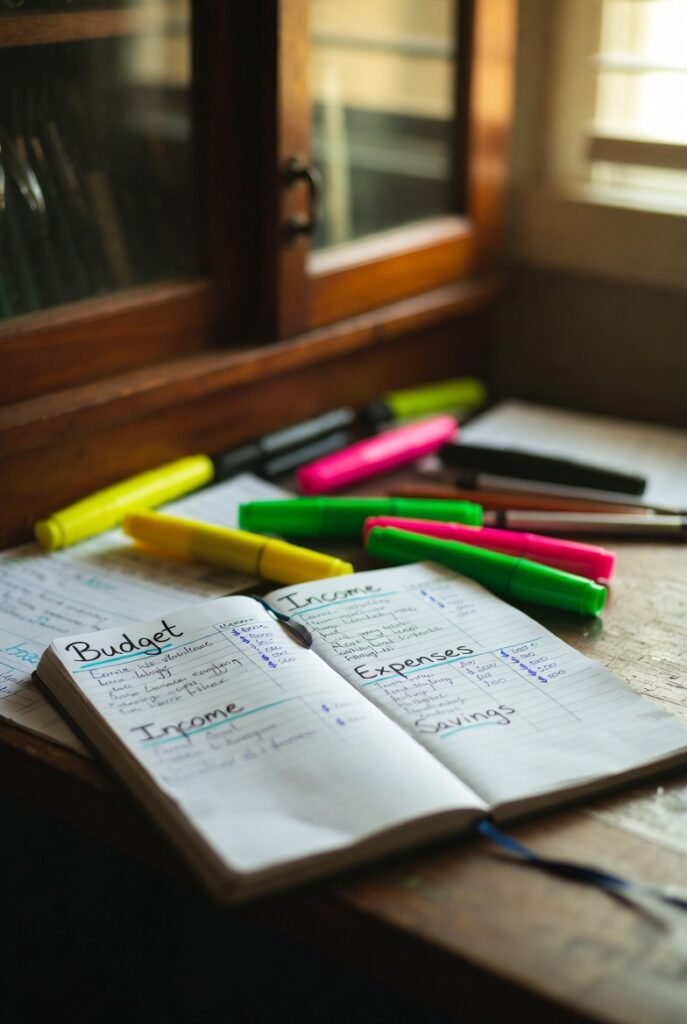
Budgeting Tips for Beginners (From Someone Who Hated Budgets)
I used to think budgeting meant:
No fun.
No personality.
Like beige walls for your finances.
But budgeting tips for beginners don’t have to feel restrictive.
Here’s what worked for me:
The “Know Your Non-Negotiables” Trick
I asked myself:
- What do I actually care about?
- What makes my life better?
- What’s just noise?
For me?
Travel = yes.
Random late-night online shopping = probably no.
So instead of cutting everything, I cut selectively.
Spend big on what matters.
Slash what doesn’t.
Financial literacy made easy isn’t about punishment. It’s about clarity.
Credit Cards: My Toxic Relationship Era
Let’s talk about credit cards.
At first, they felt like free money.
Then the statement came.
And I stared at the interest charge like it personally betrayed me.
Learning personal finance basics meant understanding how interest actually works. Not vaguely. Not “I think I get it.” Actually get it.
Credit card interest is like that one friend who “borrows” $20 and never pays you back. Except worse.
Once I understood that carrying a balance meant paying extra for stuff I already bought, I changed my strategy.
Now?
If I can’t pay it off in full, I don’t swipe.
Simple rule. Hard at first. Powerful later.
Emergency Funds: The Least Sexy, Most Powerful Thing
If you want financial literacy made easy in one sentence:
Build an emergency fund.
That’s it.
When my car broke down two years ago, I didn’t panic. I didn’t put it on a card. I didn’t spiral.
That feeling? Calm competence.
10/10 recommend.
Start with $1,000. Then aim for 3–6 months of expenses.
It’s practical. It’s life-changing.
Investing (Or: The Thing I Avoided for Years)
I used to think investing was for finance bros in Patagonia vests.
Turns out… it’s for anyone who doesn’t want to work forever.
When I first started learning about smart money habits, I realized something: investing isn’t about being brilliant.
It’s about being consistent.
I started with:
- My 401(k) (especially the employer match)
- A Roth IRA
- Low-cost index funds
Nothing fancy. No day trading. No dramatic stock picks.
Just steady contributions.
If you want a refreshingly honest take on investing basics, I genuinely enjoy reading https://www.mrmoneymustache.com — he makes frugality weirdly entertaining.

The Emotional Side of Money (Nobody Warned Me)
Financial literacy made easy isn’t just about numbers.
It’s about feelings.
Shame.
Fear.
Comparison.
I’ve compared my savings to friends. I’ve wondered if I started too late.
You ever scroll social media and suddenly feel financially inferior?
Same.
But here’s what I’ve learned:
Money is personal.
Your timeline is personal.
And comparing net worth is about as useful as comparing shoe sizes.
Pointless.
How to Manage Money Without Becoming Obsessed
There’s a fine line.
You want to be responsible… but not paranoid.
I don’t check my investment account daily. That’s a fast track to emotional chaos.
I automate:
- Savings
- Retirement contributions
- Bills
Automation is underrated.
It removes decision fatigue. And honestly? I don’t trust “motivated me” as much as I trust systems.
Smart Money Habits That Actually Stick
Here’s what’s worked for me:
- Pay yourself first (save before spending)
- Avoid lifestyle inflation after raises
- Review finances monthly (wine optional)
- Keep expenses lower than income (obvious, but still)
One underrated habit? Tracking net worth quarterly.
The first time I calculated mine, it was… humbling.
But watching it slowly grow? Addictive.
In a healthy way.
Things I Wish Someone Had Told Me Sooner
- Budgeting isn’t about restriction—it’s about intention.
- Debt doesn’t make you bad with money. Avoiding it does.
- Investing early beats investing perfectly.
- Financial literacy is a skill, not a personality trait.
- You can enjoy life and save for the future.
I used to think “learning how to manage money” meant becoming serious and boring.
It doesn’t.
You can still travel.
Still eat out.
Still buy the occasional unnecessary candle.
Just do it consciously.
The Real Secret (Spoiler: It’s Boring)
Consistency.
Not intensity.
Not overnight transformation.
Small habits. Repeated.
Financial literacy made easy is really about removing intimidation.
Money isn’t mystical.
It’s math.
Behavior.
Patience.
And maybe a little therapy.

